
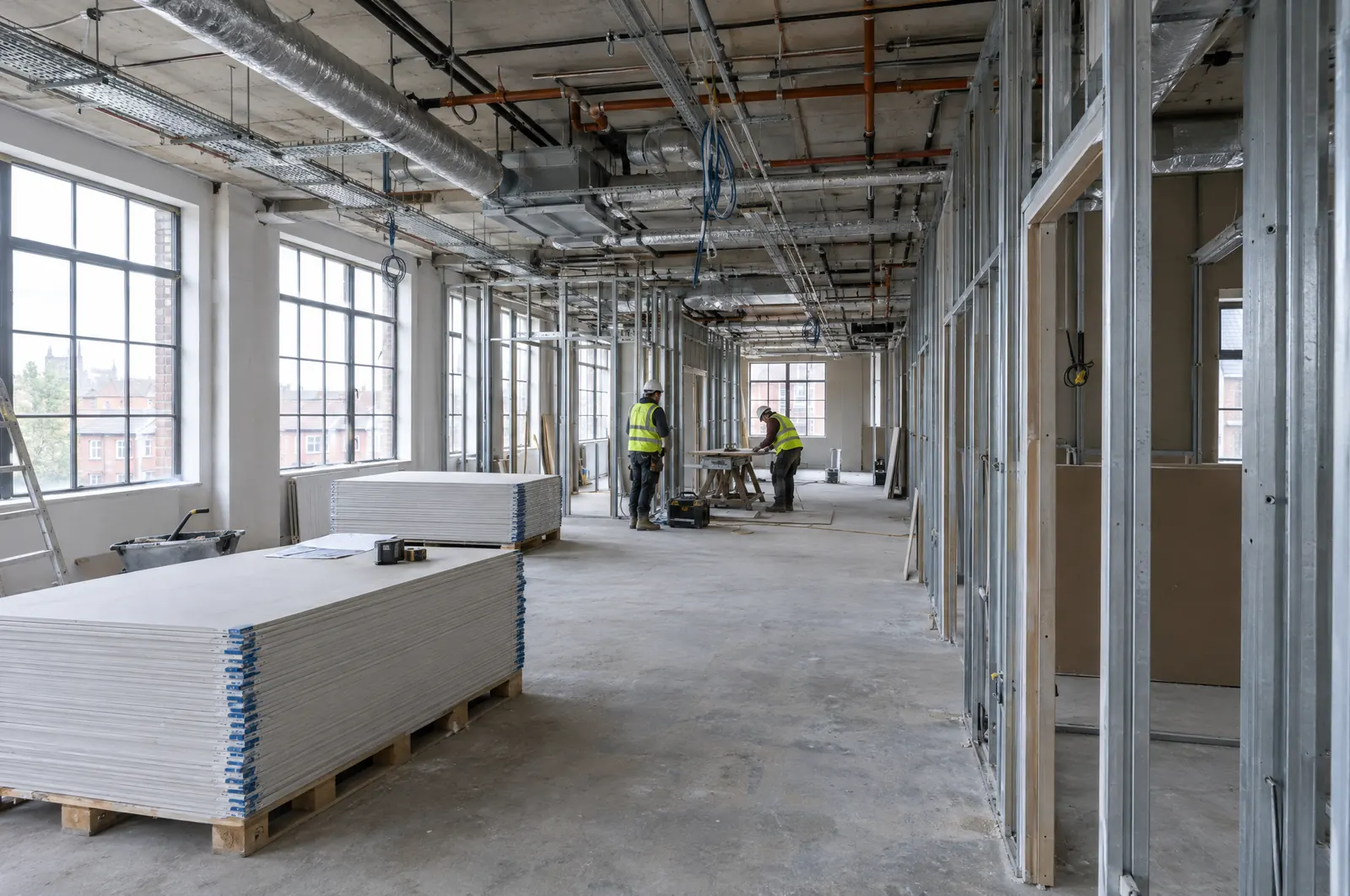
- Building work is charged at 20% unless a relief in the VAT legislation brings it down to 5% or 0%.
- New homes are 0%. Most conversions and renovations of long-empty homes are 5%. Repairs, extensions and work on an occupied home are 20%.
- Carpets, most appliances and fitted furniture other than kitchens stay at 20% on every project.
VAT on building work is charged at 20%, 5% or 0%. The standard rate of 20% applies unless the project falls within one of the reliefs written into the VAT legislation. The rate depends on the building and the work being done to it, not on the builder you choose.
The three rates
- 20%, the standard rate. The default. It covers repairs, maintenance, extensions and most work on a home someone is living in.
- 5%, the reduced rate. It covers most residential conversions and the renovation of homes that have stood empty for two years.
- 0%, the zero rate. It covers the construction of new homes and a small number of other cases.
The gap is large. As an example of scale only, on £100,000 of work the VAT is £20,000 at 20%, £5,000 at 5% and nothing at 0%.
Where each type of project usually lands
- New build homes: 0%. See VAT on new build homes.
- Conversions: usually 5%. An office, shop or barn into homes, or a change in the number of dwellings in a building. See VAT on conversions.
- Renovating a home empty for two years: 5%. See empty property renovation.
- Listed buildings: mostly 20%. The zero rate for alterations was withdrawn on 1 October 2012.
- Energy-saving materials installed in a home: 0% until 31 March 2027, then 5%.
- Extensions, repairs and refurbishment of an occupied home: 20%. See extensions and refurbishment.
These are headlines. Each relief has several conditions, and any one of them can defeat it. Where the work does qualify, the building materials the contractor supplies and fits take the same rate as the labour.
What people get wrong
- "The builder decides the rate." The legislation decides it. A builder cannot offer 5% as a favour, or insist on 20% out of habit.
- "A qualifying project is one rate throughout." Carpets, most appliances and fitted furniture other than kitchens are 20% on every project, even inside a zero-rated new build. Professional fees supplied separately are 20% too.
- "I can claim it back from HMRC later." VAT charged at the wrong rate cannot be reclaimed from HMRC by the customer. The remedy is a credit note and a corrected invoice from the contractor.
- "20% must be wrong." Plenty of work is correctly standard rated.
The contractor is responsible for charging the right rate, and still owes HMRC the difference if they charge too little. That is why many default to 20%. The cost of that caution lands on you.
Where it goes wrong
- Whether the building and the work both qualify, once the planning consent and the drawings are read together.
- Whether the dates and the occupation history stand up against the evidence.
- A single rate across the whole quote, when the answer differs line by line.
- A project that only partly qualifies, where the price has to be split.
The sensible next step
Do not assume a 20% quote is wrong, and do not assume it is right. Send us the builder's quote and we will tell you whether there is anything worth pursuing. The fee is fixed and agreed first, and if your project is correctly at 20% we will say so.
Questions people ask
How much is VAT on building work?
20% in most cases. It drops to 5% for most residential conversions and for renovating a home that has been empty for two years, and to 0% for building a new home. The rate depends on the building and the work, not on the builder.
When is VAT on building work 5%?
Mainly in two cases. The first is a qualifying conversion, such as a non-residential building into homes or a change in the number of dwellings in a building. The second is the renovation of a dwelling that nobody has lived in during the two years before the work starts.
Can I claim back the VAT on building work?
Not if it was simply charged at the wrong rate. HMRC will not refund VAT charged in error to the customer, and the remedy is a credit note and a corrected invoice from the contractor. People building their own home can reclaim VAT on building materials through the DIY housebuilders scheme, which is a claim they make themselves.