Rates at a glance
| Work or supply | Rate |
|---|---|
| Renovation and alteration work on a home empty for two years | 5% |
| Building materials supplied and fitted by the contractor | 5% |
| The same work where the home was lived in during the two years | 20% |
| Carpets, appliances and fitted furniture other than kitchens | 20% |
| Materials bought on their own, not fitted by the supplier | 20% |
| Architects', surveyors' and consultants' fees | 20% |
The rate for your project depends on its facts. Each line of a quote is rated on its own.
Does yours qualify?
The headline tests. All of them have to hold.
- The property is a dwelling.
- The work is renovation or alteration of the dwelling.
- It has not been lived in at any time during the two years ending when the work starts.
Plus 3 further points we test. These are the ones that are easy to miss, and any one of them can change the answer. A qualification report works through every one against your documents.
About the qualification reportWhere projects go wrong
- Any occupation in the two-year window, however short. A brief let, or a previous owner who moved out 20 months before the work begins, is enough to break it.
- No evidence. A builder who cannot show the property was empty carries the risk of the 5% rate, and many will charge 20% to avoid it.
We check for 4 more pitfalls on every project of this kind. Most only come to light once the work has been invoiced, which is the expensive time to find them.
What it can be worth
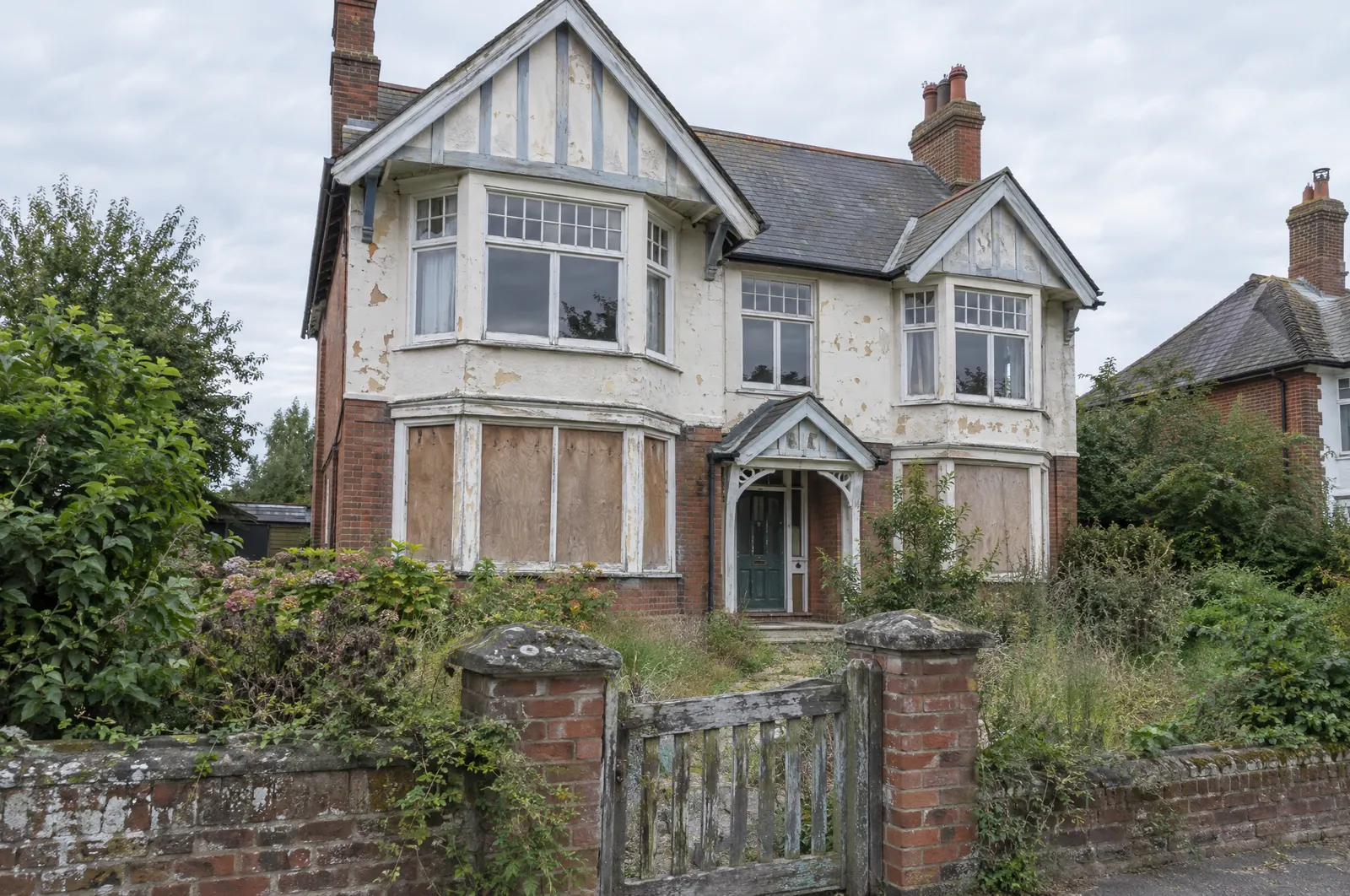
A three-bedroom house empty for three years
A buyer takes on a house that has stood empty since the last owner moved into care three years ago. The builder quotes £140,000 before VAT for a full renovation, at 20% throughout.
| Item | Net | Rate | VAT |
|---|---|---|---|
| Roof renewal and structural alterations | £31,000 | 5% | £1,550 |
| Rewiring and new heating system | £26,000 | 5% | £1,300 |
| Replacement windows and external doors | £18,000 | 5% | £900 |
| Replastering, joinery and decoration | £23,000 | 5% | £1,150 |
| Fitted kitchen units and worktops | £14,000 | 5% | £700 |
| Bathroom and sanitaryware | £12,000 | 5% | £600 |
| Kitchen appliances | £6,500 | 20% | £1,300 |
| Carpets and underlay | £5,500 | 20% | £1,100 |
| Fitted wardrobes | £4,000 | 20% | £800 |
| Total | £140,000 | £9,400 |
- VAT if quoted at 20% throughout
- £28,000
- VAT rated line by line
- £9,400
- Difference
- £18,600
An example to show how the rates fall across a typical empty property renovation. It is not a figure for your project.
How we help with empty property renovations
We establish whether the property meets the empty homes test on the date your work is due to start, and whether another route to a lower rate fits if it does not. You get a clear answer on whether the project qualifies, with the reasoning written down so the builder can see the basis for the rate. If the answer is 20%, we tell you.
A line-by-line analysis then gives you the right rate for every part of the quote and a letter your builder can rely on. The test looks back from the day the work starts, so it pays to have the answer before then. If you are not sure which route fits, a qualification report gives you that answer first. To start, send us your quote.
Questions
How long does a property have to be empty to get 5% VAT?
Two years. The home must not have been lived in at any time during the two years ending on the day the work starts. A property empty for 23 months when the builders arrive does not meet the condition.
What evidence do I need to show a property was empty for 2 years?
Council tax and electoral roll records are the usual starting point, supported by other records from the period. No one document settles it. The aim is a set of records that together cover the whole two years without a gap.
Does the two years run from when I bought the property?
No. It runs back from the day the work starts, so time the property stood empty before you bought it counts. If the seller was living there 18 months before your builder begins, the condition is not met, however long you have owned it.
Based on the Value Added Tax Act 1994 and HMRC's published guidance. This page explains how the rules work in general. It is not advice on your project, and no rate applies until the facts have been analysed.