
Areas · London
Construction VAT consultant for London
London building work is mostly conversion and alteration. Offices become flats, houses are split and put back together, and shops sit under homes in the same building. Some of that work is 5%, some has to be apportioned and a great deal is correctly 20%.
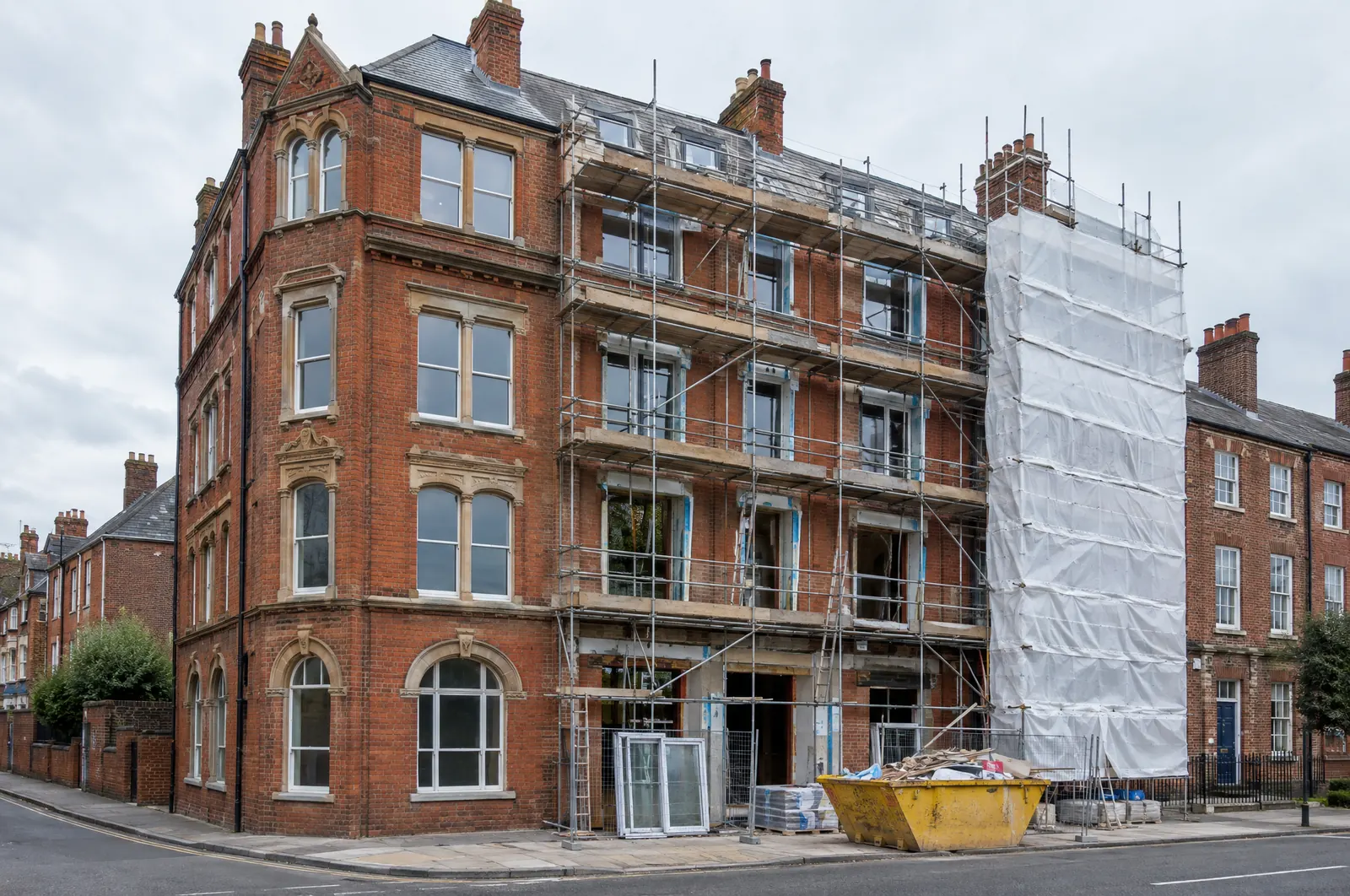
The projects we see in London
-
Office to residential
An office building converted into flats goes from no dwellings to some. The contractor's services are normally 5%, and a developer who sells or grants long leases can recover that VAT.
-
Houses into flats and flats back into houses
Splitting a terraced house into flats, or combining flats into one house, changes the number of dwellings. The work can be 5% in either direction, and the property need not have been empty.
-
Mixed-use buildings
Where there is a shop below and flats above, only the residential part can qualify. The contract is apportioned on a fair and reasonable basis and the method is recorded at the time.
-
HMO conversions
Converting a house or a commercial building into a house in multiple occupation, such as bedsits, is one of the three kinds of conversion that can take the 5% rate.
-
Basements, extensions and listed townhouses
A basement dug under an occupied house, a rear extension and a loft conversion are all 20%. So are alterations and repairs to a listed townhouse, unless the project qualifies another way.
Conversions are where London's VAT is decided
Very little London work is a new building on an empty plot. Most of it changes what an existing building is used for or how it is divided. That puts it under the conversion rules, where the contractor's services can be 5% instead of 20%.
Three kinds of conversion qualify. The first is a change in the number of single household dwellings, such as an office block into flats, a house into flats or flats back into one house. The second is a conversion into a house in multiple occupation. The third is a conversion into a residential institution such as a care home, which needs a certificate. In each case the planning consent and building control approval the work requires must be held.
For a developer, the rate charged is half the picture. A person who converts a non-residential building into dwellings and then sells them, or grants long leases, makes a zero-rated first grant. That allows the 5% charged on the works to be recovered.
Mixed-use buildings and apportionment
A typical London high street building has a shop or restaurant at street level and flats above. Converting the upper floors while refitting the shop is one contract with two rates. The residential conversion can be 5%. The commercial work is 20%. Shared elements such as the roof, the structure and the scaffolding have to be split.
The split must be fair and reasonable. Actual costs are used where the works are priced separately, and floor area or value where they are not. The method should be chosen and recorded when the job is priced. A split worked out afterwards is much harder to stand behind.
What stays at 20%
A great deal. Basement excavations, rear and side extensions and loft conversions on an occupied home are all 20%. So is the refurbishment of a flat that stays one flat. Alterations to a listed townhouse lost their zero rate in 2012. If your project is one of these, we will tell you.
We work with London clients and nationally by email and phone. Send us the tender or the builder's quote to start. Fees are fixed and agreed first.
Questions
Straight answers.
Is an office to residential conversion 0% or 5%?
The contractor's services are normally 5%. The 0% rate for conversion services applies only where the customer is a relevant housing association. A developer who sells the flats, or grants leases of more than 21 years, makes zero-rated supplies and can recover the 5%.
We are adding a basement to a house we live in. Can that be 5%?
Normally not. Enlarging an occupied home is 20%. If the work creates an additional self-contained dwelling, the number of dwellings changes and the position needs looking at properly. That is a reason to check, not an answer.
How do you split the VAT on a building with a shop and flats?
On a fair and reasonable basis. Where the works are priced separately, actual costs are used. Otherwise floor area or value. Shared elements such as the roof and the structure are divided using the same method, and the method is written down when the contract is priced.
Do you have a London office?
We work with London clients by email and phone, as we do nationally. The analysis is done from the tender, the drawings, the planning consent and the evidence of the building's use.
Next step
Send us the quote. We’ll tell you whether there’s anything to save.
Upload your builder’s quote or tender. We look at the project and the pricing and tell you whether a lower rate is worth pursuing, before you commit to anything.
- Fixed fee, agreed up front
- Every rate tied to the legislation
- We'll tell you if it's 20%