Rates at a glance
| Work or supply | Rate |
|---|---|
| Construction of new flats in a building that also contains a commercial unit | 0% |
| Conversion of part of a building into dwellings, where the number of dwellings changes | 5% |
| Work on the commercial part, including shop fit-out | 20% |
| Shared structure, roof, services and external works | Varies |
| Preliminaries, variations and retention | Varies |
| Carpets, appliances and fitted furniture other than kitchens | 20% |
The rate for your project depends on its facts. Each line of a quote is rated on its own.
Does yours qualify?
The headline tests. All of them have to hold.
- Part of the building or part of the work qualifies in its own right, for example as a new dwelling or a qualifying conversion.
- The qualifying and non-qualifying parts can be identified on the drawings and in the pricing.
- The split between them is fair and reasonable, and the method is written down at the time with the reasoning.
Plus 3 further points we test. These are the ones that are easy to miss, and any one of them can change the answer. A qualification report works through every one against your documents.
About the qualification reportWhere projects go wrong
- One rate across the whole job. A mixed-use building charged entirely at 0% or 5% is wrong, and so is one charged entirely at 20%.
- A split worked out after the event. A method reconstructed once HMRC has asked is much weaker than one recorded when the contract was priced.
We check for 4 more pitfalls on every project of this kind. Most only come to light once the work has been invoiced, which is the expensive time to find them.
What it can be worth
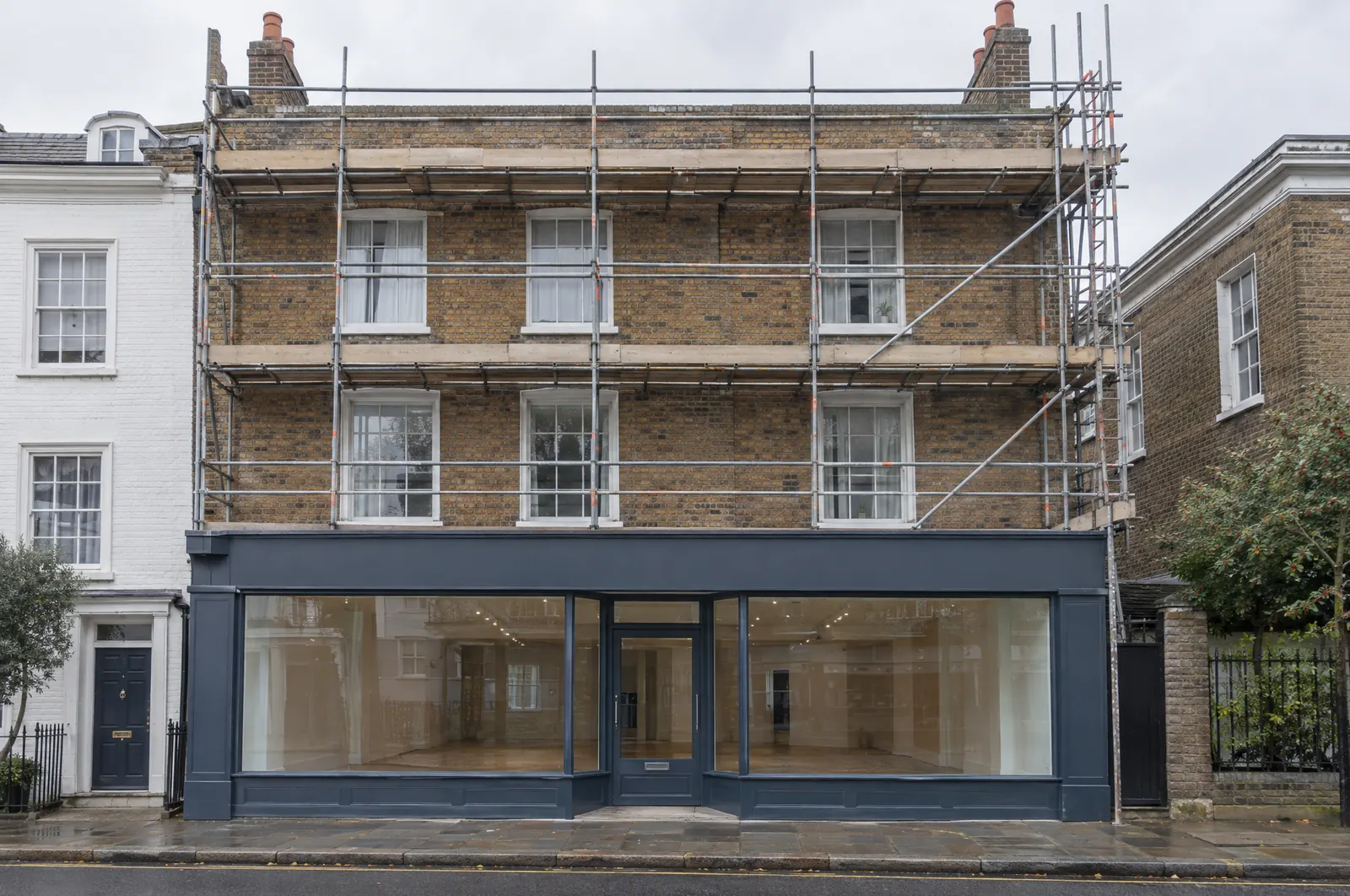
A shop with two floors above converted into four flats
A contractor tenders £470,000 before VAT to convert the two upper floors of a high street building into four flats and refit the ground-floor shop, which stays a shop. Shared roof and structural work is split by floor area, two thirds residential and one third commercial.
| Item | Net | Rate | VAT |
|---|---|---|---|
| Conversion of the upper floors into four flats | £268,000 | 5% | £13,400 |
| Fitted kitchens and bathrooms for the flats | £46,000 | 5% | £2,300 |
| Roof and structural work, residential share | £42,000 | 5% | £2,100 |
| Preliminaries, share following the 5% work | £19,500 | 5% | £975 |
| Roof and structural work, commercial share | £21,000 | 20% | £4,200 |
| Shopfront and shop refit | £58,000 | 20% | £11,600 |
| Preliminaries, share following the 20% work | £4,500 | 20% | £900 |
| Appliances and carpets for the flats | £11,000 | 20% | £2,200 |
| Total | £470,000 | £37,675 |
- VAT if quoted at 20% throughout
- £94,000
- VAT rated line by line
- £37,675
- Difference
- £56,325
An example to show how one contract divides between rates. The floor area split is illustrative. It is not a figure, or a method, for your project.
How we help with mixed-use buildings and apportionment
We establish which parts of your building and which parts of the work qualify for a lower rate, and set out a basis for dividing the price between them. You get a clear answer on what qualifies, and an apportionment with its reasoning recorded at the time, so the contractor can see exactly how each figure was reached.
A line-by-line analysis then gives you the right rate for every part of the pricing document and a letter for the contractor setting out what to charge. A split is far easier to stand behind when it is settled before the contract is priced. If you are putting the job out to tender, see our page for contractors. To start, send us your quote.
Questions
How is VAT charged on a mixed-use building?
Each part takes its own rate. The residential part can take 0% or 5% if it meets the conditions for a new dwelling or a qualifying conversion, and the commercial part is 20%. Costs that serve both, such as the roof, are apportioned between them on a fair and reasonable basis.
What VAT applies to a shop with flats above?
It depends on the work. Converting the upper floors into flats can be 5% where the number of dwellings changes, while work on the shop is 20%. If the flats already exist and are simply being refurbished, the work on them is 20% as well, unless they have been empty for two years.
Is there a set formula for VAT apportionment on construction work?
No. The requirement is that the method is fair and reasonable. Whichever basis is chosen, it should be recorded at the time and applied consistently.
Based on the Value Added Tax Act 1994 and HMRC's published guidance. This page explains how the rules work in general. It is not advice on your project, and no rate applies until the facts have been analysed.