
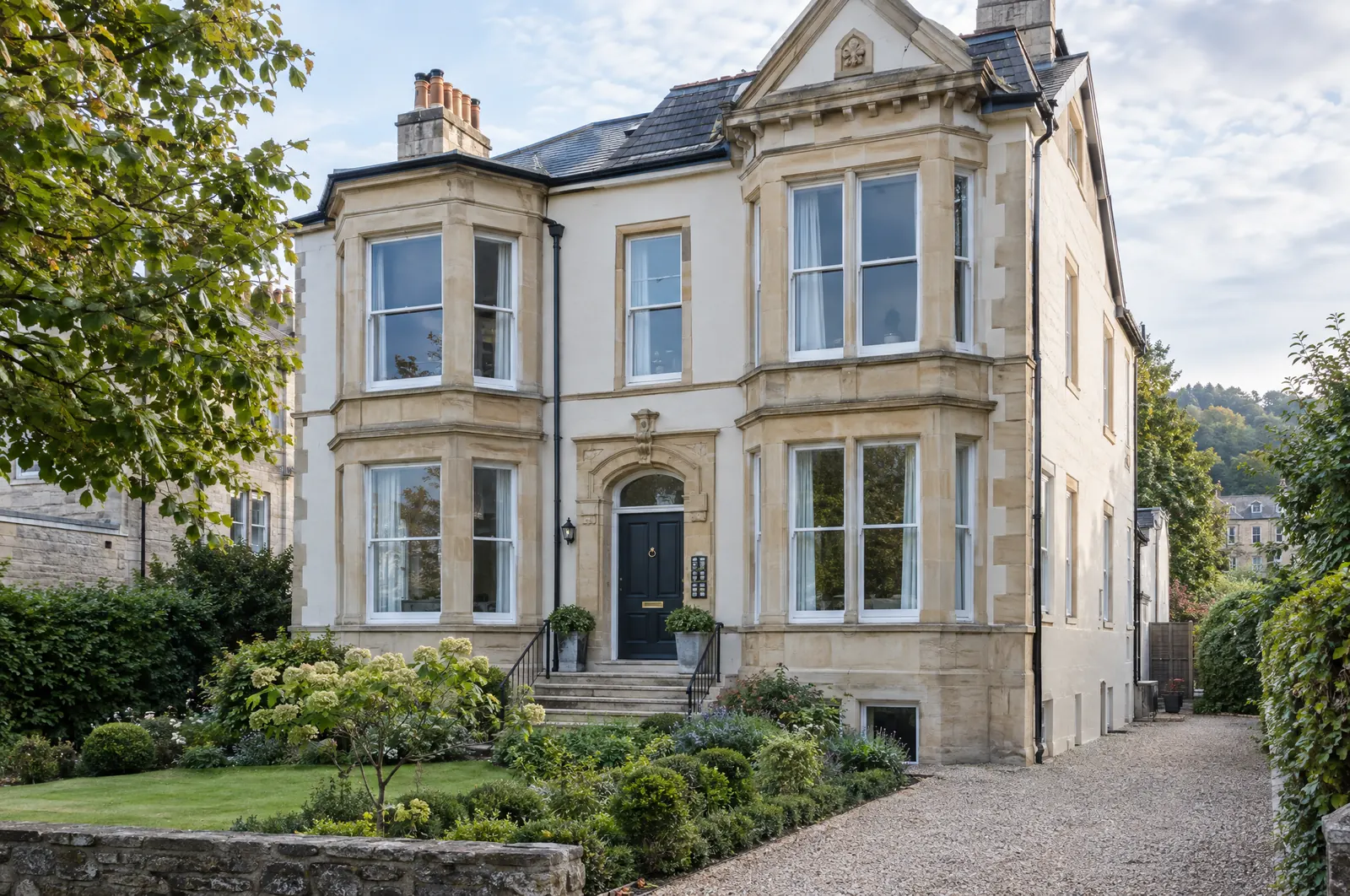
- A conversion that changes the number of single household dwellings in a building can be charged at 5% VAT.
- More homes or fewer both count, as long as at least one dwelling is left at the end.
- The property does not need to have been empty. The two-year empty rule is a separate relief.
If building work changes the number of homes in a building, the contractor's conversion work can qualify for 5% VAT instead of 20%. It works whether the number goes up or down, and the property does not need to have been empty. Most people who miss it have mixed it up with a different rule.
The rule in broad terms
The VAT Act gives the reduced rate to qualifying conversion work and to the building materials supplied with it. One kind of qualifying conversion is called a changed number of dwellings conversion. After the work, the building must contain a different number of single household dwellings than before, and at least one.
- One house into four flats. From one to four.
- Four flats back into one house. From four to one.
- An office into twelve flats. From none to twelve.
The last two surprise people. Fewer homes counts in the same way as more. And a building with no homes in it starts at zero, which is how commercial to residential conversions come in under the same rule.
As an example of scale only, on £250,000 of conversion work the VAT is £50,000 at 20% and £12,500 at 5%. That is not a figure for your project.
The property does not need to have been empty
This is the part most often missed. There are two separate 5% reliefs for residential property. One is for conversions, and looks at what the building becomes. The other is for the renovation of homes empty for two years, and looks at the building's history.
The empty homes rule is the one most builders and owners have heard of. So someone asks whether the job is 5%, hears that the house was not empty for two years, and stops there. Nobody asks the second question.
A house lived in right up to the day the builders arrive can still be converted into flats at the reduced rate. A project only needs one route, not both.
What does not qualify
The rule only works if the count really changes, and each home counted is a dwelling in its own right. Refurbishing four flats into four better flats changes nothing. An extension or a loft conversion adds rooms, not dwellings. An annexe that is not self-contained leaves the count at one. All of that is 20%.
Even on a qualifying conversion, some of the cost stays at 20%. Carpets, most appliances and fitted furniture other than kitchens are excluded, and so are professional fees supplied separately.
Where it goes wrong
- Whether each new unit counts as a dwelling in its own right, or only looks like one on the plans.
- Whether the planning consent quietly ties one unit to another.
- Whether the count before the work can be proved, not just asserted.
- Which parts of the quote follow the 5% rate and which do not.
The headline is simple. The conditions behind it are not, and any one of them can defeat the relief.
The sensible next step
If the number of homes is changing on your project, send us the builder's quote before invoices go out at 20%, and we will tell you whether there is anything worth pursuing. Any fee is fixed and agreed first, and if the answer is 20% we will say so. Our page on converting a house into flats gives the broader picture.
Questions people ask
Is converting a house into flats 5% VAT?
It can be. Splitting one house into two or more self-contained flats changes the number of single household dwellings in the building, which is one of the conversions that qualifies for the reduced rate. Whether your project qualifies depends on the plans and the planning position.
Does a property have to be empty for two years to get 5% VAT on a conversion?
No. The two-year condition belongs to a different relief, for the renovation or alteration of empty homes. A conversion that changes the number of dwellings has no empty period condition at all.
Is it 5% VAT to convert flats back into one house?
It can be. The rule works in both directions. Four flats combined into one house is a change from four dwellings to one, and at least one dwelling remains, so it can fall within the reduced rate in the same way as a split.