
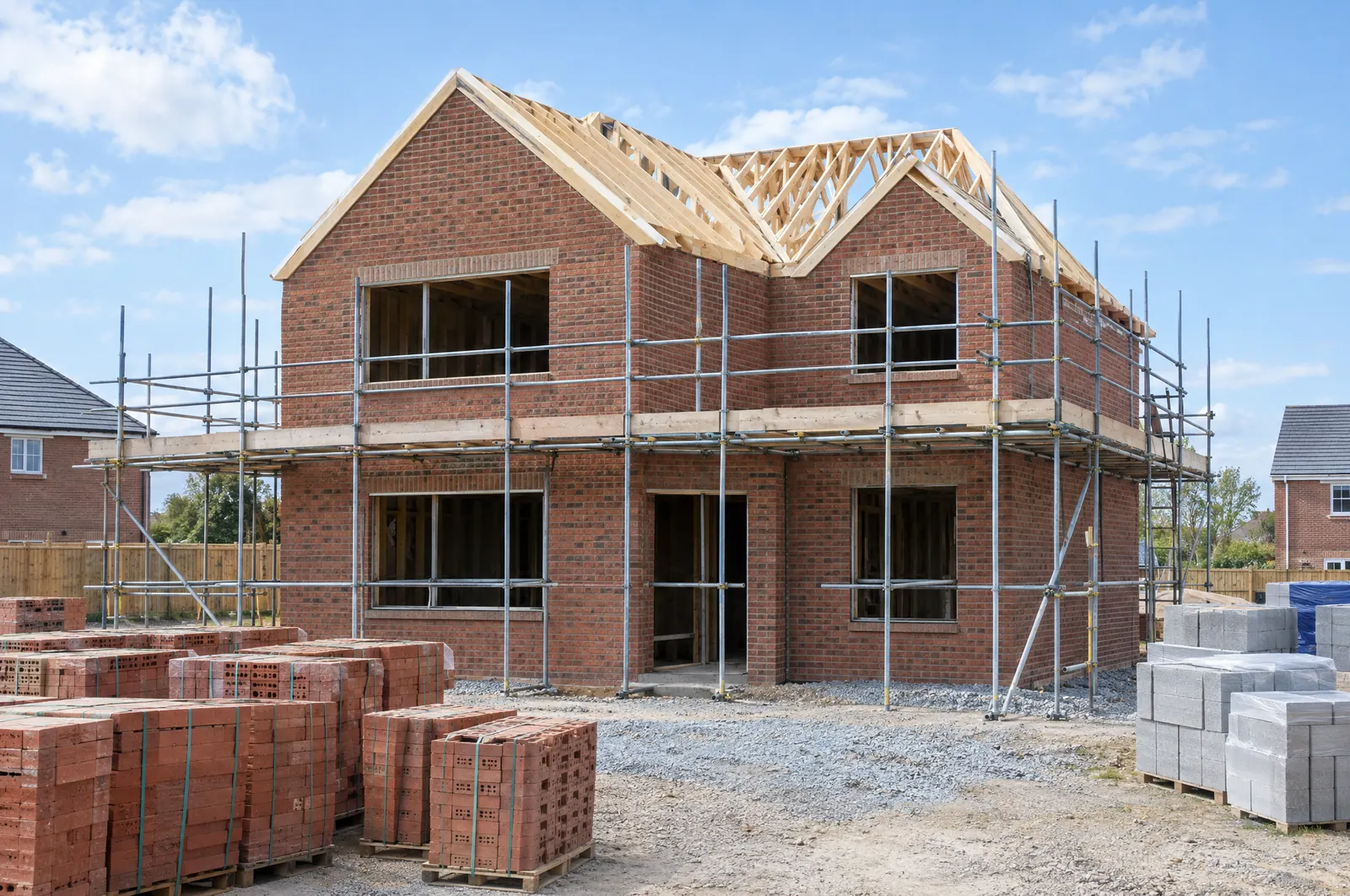
- VAT Notice 708 is HMRC's public guidance on when building work is charged at 0%, 5% or 20%.
- The notice is HMRC's view. The law itself is in the Value Added Tax Act 1994.
- Energy-saving materials are not in Notice 708. They have their own guidance, VAT Notice 708/6.
VAT Notice 708 is HMRC's public guidance on VAT for buildings and construction. It explains when building work, and the materials supplied with it, can be charged at 0% or 5% instead of 20%. It is guidance and not the law. The law is in the Value Added Tax Act 1994.
What it is and who it is for
Its full title is Buildings and construction (VAT Notice 708). HMRC publishes it free on GOV.UK: VAT Notice 708.
It is written for anyone who has to decide, or check, the VAT rate on building work. That means contractors and developers, people having a home built or converted, and the architects and accountants advising them. It speaks to the contractor as much as to the customer, because the party making the supply is liable for charging the right rate.
What it covers in broad terms
- New buildings. Building a new home is zero rated. See VAT on new build homes.
- Conversions. Most residential conversions are 5%. See VAT on conversions.
- Empty homes. Renovating a dwelling nobody has lived in for two years is 5%. See empty property renovation.
- Protected buildings. The zero rate for approved alterations to listed buildings was withdrawn on 1 October 2012.
- Building materials. Materials the contractor supplies and fits follow the rate of the work, with some items always at 20%.
- Certificates and apportionment. Some reliefs depend on a certificate given before the work is supplied, and a job that only partly qualifies has to be split.
Each of those headlines sits on top of several conditions, and any one of them can defeat the relief. As an example of scale only, on £100,000 of work the VAT is £20,000 at 20%, £5,000 at 5% and nothing at 0%.
What people get wrong about it
- "It is the law." It is HMRC's view of how the legislation applies. A conclusion that rests on the legislation and the notice together, with the facts recorded, is far easier to defend than one sentence lifted from the guidance.
- "It covers everything." Energy-saving materials are in VAT Notice 708/6. Adaptations for disabled people are in VAT Notice 701/7. The domestic reverse charge is in VAT Notice 735.
- "If the notice says 5%, HMRC will agree." Nobody can promise that. The notice tells you the rules. It does not apply them to your building, your contract or your builder's price.
Where it goes wrong
- A single paragraph quoted in support of a rate, with the conditions around it left unread.
- Whether the planning consent and the drawings actually match the words in the notice.
- Which items in the quote count as building materials and which do not.
- Whether a certificate is needed, and whether it was in place in time.
The sensible next step
Applying the notice takes the planning consent, the drawings and the quote, read together. Send us the builder's quote and we will tell you whether there is anything worth pursuing. The fee is fixed and agreed first, and if the project is correctly at 20% we will say so.
Questions people ask
What is VAT Notice 708?
It is HMRC's published guidance on the VAT treatment of buildings and construction. It explains when construction, conversion and renovation work can be zero rated or reduced rated, and how building materials are treated.
Is VAT Notice 708 the law?
No. It is HMRC's explanation of how it sees the law applying. The law is in the Value Added Tax Act 1994, and a sound VAT analysis rests on the legislation as well as the notice.
Does VAT Notice 708 cover solar panels and heat pumps?
Not in detail. The relief for installing energy-saving materials is explained in a separate notice, VAT Notice 708/6. Installation in residential accommodation is zero rated until 31 March 2027 and reduced rated at 5% from 1 April 2027.